
Baltimore County Criminal Court Records
A criminal court record is the court case file kept once charges are filed. In Baltimore County, misdemeanor cases and certain felonies may begin in District Court. Serious felonies, jury-trial matters, and many cases that move beyond District Court are handled in the Circuit Court for Baltimore County. The Clerk of the Circuit Court maintains Circuit Court criminal files, while District Court records remain within Maryland's statewide District Court system.
The criminal court file is broader than the charge list. It can show the original charging document, amended charges, arraignment, bond events, appearances, motions, continuances, trial dates, pleas, verdicts, dispositions, sentences, probation terms, restitution, fines, costs, and appeal notices. A closer look at the charge itself belongs with Baltimore County arrest records and court charges, while a broad view of civil, family, traffic, and other files belongs with Baltimore County court records.
The Maryland Title 16 judicial-record access rules are a key source for understanding public access to criminal case records in Baltimore County.
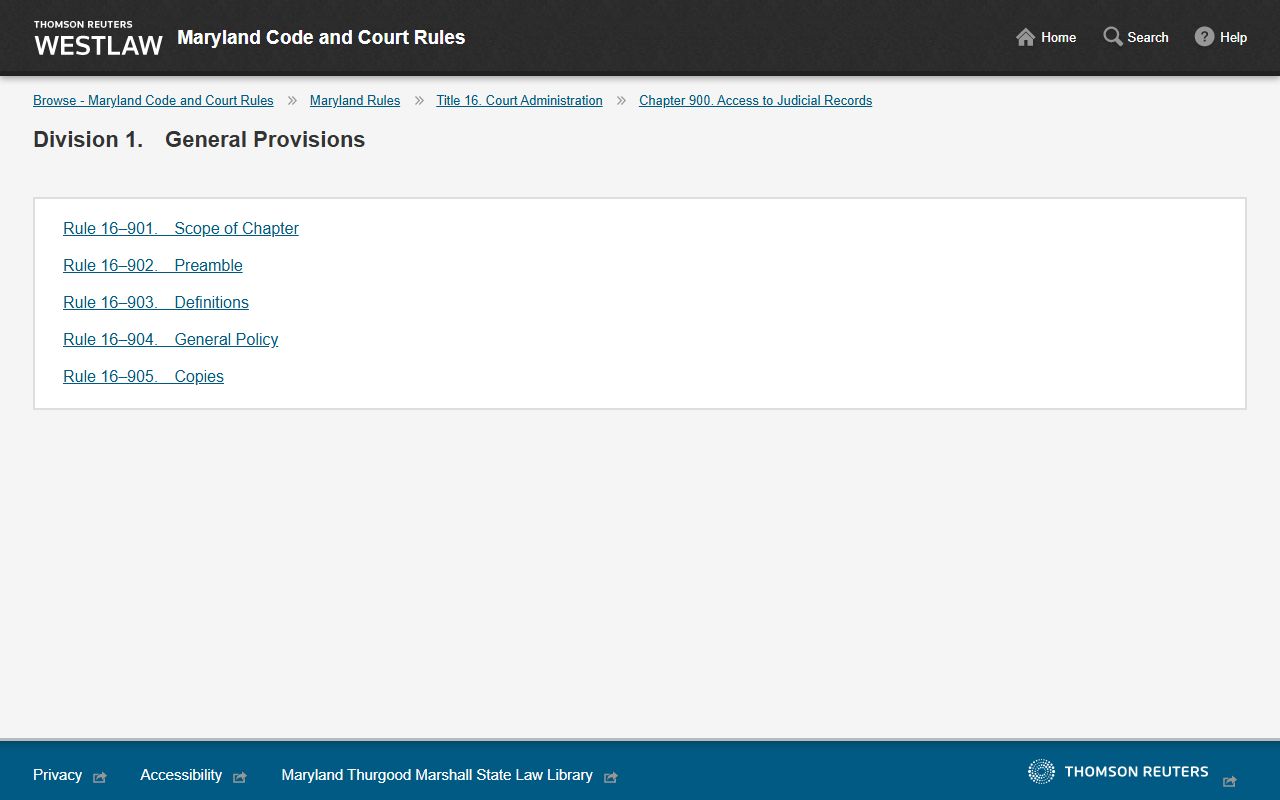
Those rules explain why a public case summary may be visible while certain documents, identifiers, juvenile matters, sealed materials, or expunged records remain outside ordinary public view.
Search Baltimore County Criminal Court Records
Maryland Judiciary Case Search is the starting point for public Baltimore County criminal court records. It can show criminal and traffic case summaries from Maryland District Court and criminal case summaries from Maryland Circuit Court. A search by case number is best. A name search can work, but common names should be narrowed by first name, Baltimore County, court, case type, or filing-date range.
- Open Maryland Judiciary Case Search and choose a defendant-name or case-number search.
- Enter the full case number if known, or use last name, first name, and filters to narrow results.
- Select Baltimore County, Circuit Court, District Court, criminal, or traffic filters when those choices are available.
- Open the case result and review charges, hearing entries, bond information, trial dates, disposition, and sentence fields.
- Request certified copies or full documents from the Clerk of the Circuit Court or the District Court location that handled the case.
Online results do not prove that the full criminal court file is available for download. Case Search may identify document names but often does not provide public remote document images. Parties and attorneys may have additional MDEC access after registration and case-level approval, while members of the public may need a courthouse kiosk or a clerk copy request.
Baltimore County Criminal Case Stages
A Baltimore County criminal court record grows as the case moves through the court. The first public court entry may be a statement of charges, complaint, indictment, or other charging document. Later entries can reflect arraignment, counsel appearance, bond review, discovery, motions, trial scheduling, plea, verdict, sentencing, probation, and appeal activity.
Case flow: Charges Filed › Arraignment › Pretrial / Motions › Plea or Trial › Disposition › Sentencing
| Stage | What Happens |
|---|---|
| Charges Filed | The court case opens with a statement of charges, complaint, information, or indictment. |
| Arraignment | Charges are formally presented, counsel issues may be addressed, and a plea may be entered. |
| Pretrial / Motions | The court handles discovery, bond, suppression, continuance, and other requests before trial. |
| Plea or Trial | The case resolves by plea, bench trial, jury trial, dismissal, nolle prosequi, or another disposition. |
| Sentencing | The court imposes jail, probation, fines, costs, restitution, conditions, or other lawful terms after conviction. |
Baltimore County Criminal Record Fields
Criminal court records should be read field by field. A charge can be listed even if it later ends in dismissal, acquittal, stet, nolle prosequi, or amendment. A case may have several counts, and each count can have its own status. The disposition line is often the most important line for deciding whether the record shows an accusation, a conviction, or a non-conviction outcome.
| Field | What It Shows |
|---|---|
| Case Number | The unique criminal case identifier used for court lookup and copy requests. |
| Defendant | The person charged, sometimes with city, state, or date-of-birth information in public summaries. |
| Court | The Baltimore County District Court location, Circuit Court, or appellate court handling the matter. |
| Charges | The charge wording, count, severity, statute reference, trial date, and current status when shown. |
| Bond | Release status, bond amount, commitment, or other appearance-related entries when available. |
| Plea | The defendant's formal answer, such as guilty, not guilty, or another plea entry. |
| Disposition | The outcome of a charge or case, including guilty, not guilty, dismissed, stet, or nolle prosequi. |
| Sentence | Jail, probation, fines, costs, restitution, conditions, and post-judgment entries after conviction. |
The Maryland expungement statute is relevant when a public criminal court record ends in an eligible non-conviction or other qualifying result.
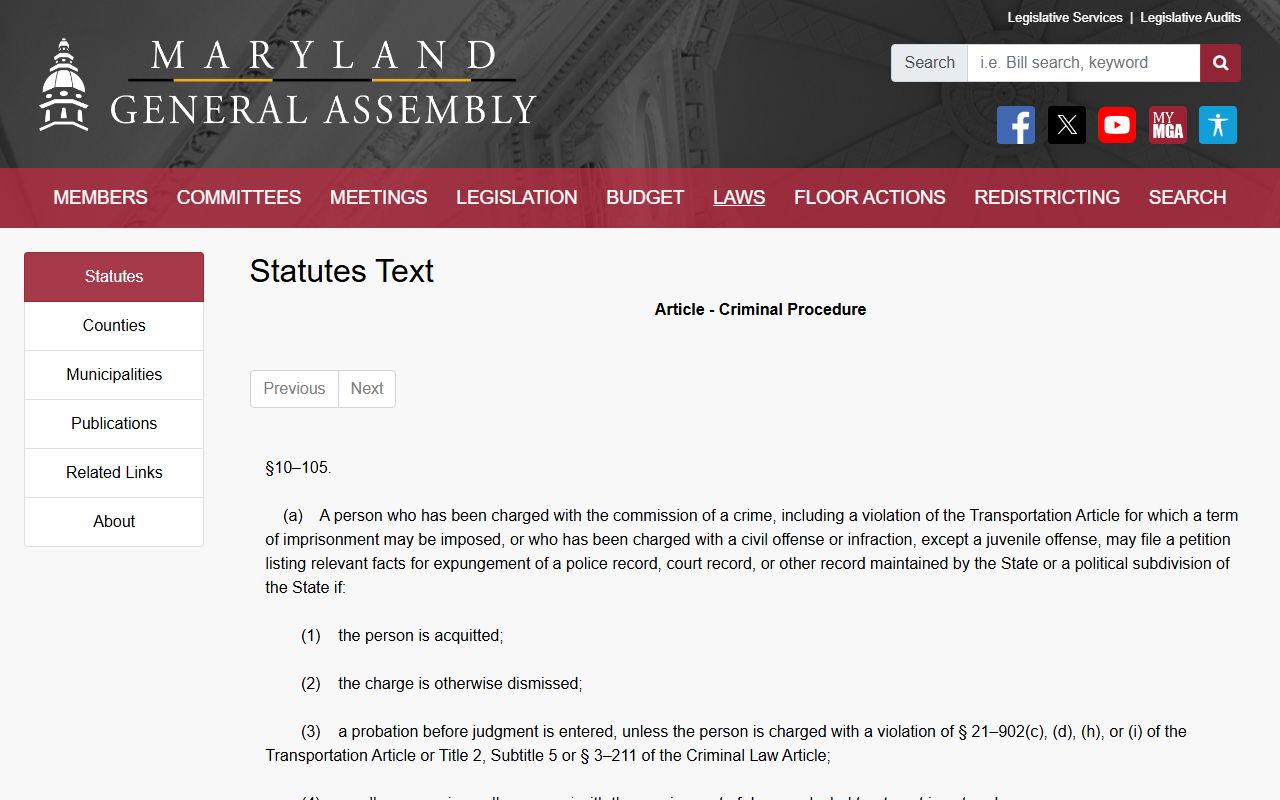
That statute matters because some records that once appeared in a Baltimore County criminal court records search may later be removed from ordinary public access after an expungement order.
Baltimore County Charges vs Convictions
A charge is an allegation filed in court. A conviction is a finding or plea of guilt. Baltimore County criminal court records can show both, and the difference is critical. A person can be charged and later acquitted, have the charge dismissed, receive a nolle prosequi, enter a stet, or have one count reduced while another count remains pending or results in conviction.
| Charge | Conviction | |
|---|---|---|
| Meaning | An accusation filed with the court. | A guilty plea or finding of guilt. |
| Where It Appears | Charging document, charge list, docket, and case summary. | Disposition, judgment, sentence, and post-judgment entries. |
| Can Change | May be amended, reduced, dismissed, or not prosecuted. | May be appealed, modified, shielded, or expunged only if law allows. |
| Use With Care | Does not prove guilt. | Shows guilt but still requires context, sentence, and appeal status. |
Reading Criminal Dispositions and Sentences
Disposition means the outcome of a charge or case. Guilty and not guilty are clear in many records, but Maryland criminal dockets also use terms that need context. Nolle prosequi means the prosecutor chose not to pursue the charge. Stet means the case was placed on an inactive docket. Dismissed, acquitted, transferred, appealed, and probation-before-judgment entries can affect whether a record remains visible online or qualifies for later relief.
Sentence entries may include jail time, suspended time, probation, fines, costs, restitution, and special conditions. A sentencing entry should be read with the disposition for each count. If there are multiple charges, one charge may have a guilty finding while another is dismissed or not prosecuted. Certified sentencing records should come from the clerk, not from a copied online screen.
The Baltimore County State's Attorney is the local prosecutor's office for criminal prosecutions in the county.
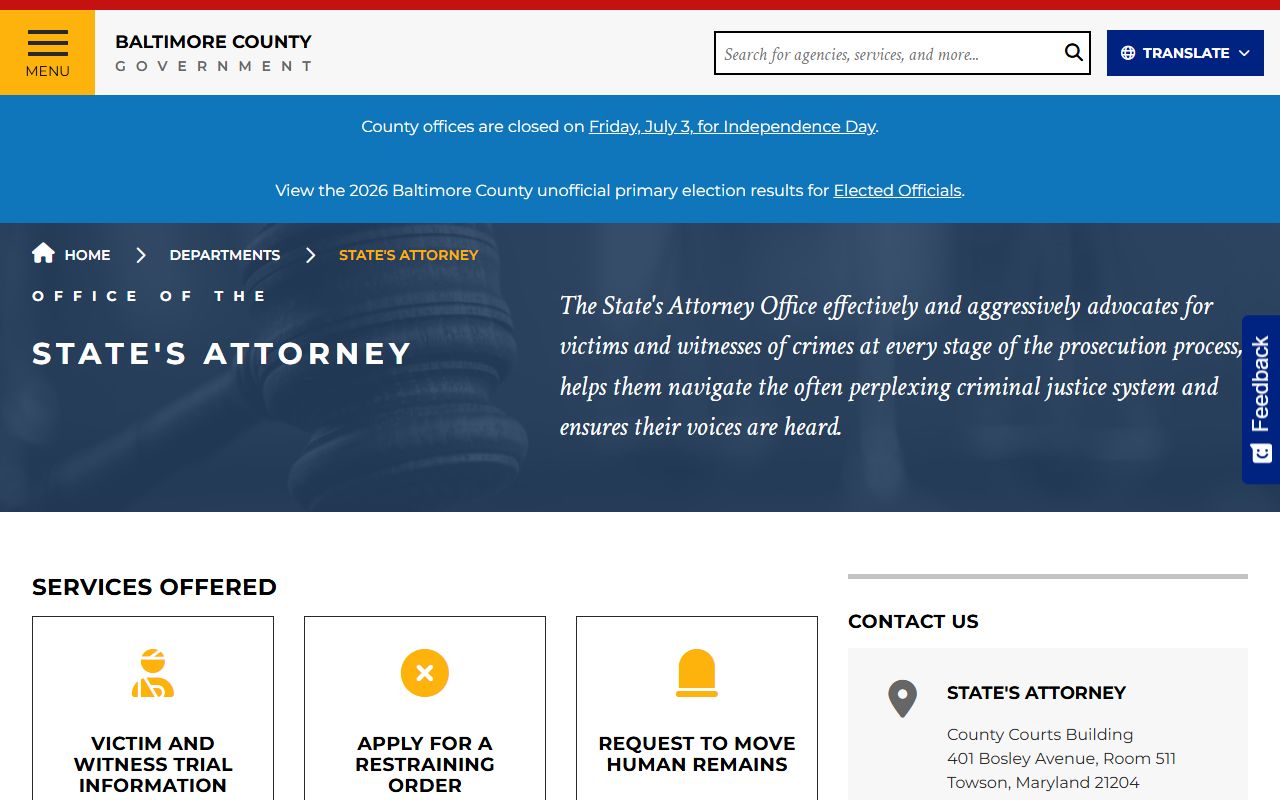
The prosecutor's role helps explain why the filed charge list can change before final disposition or sentencing appears in the criminal court record.
Baltimore County Sealed vs Expunged Records
Sealing and expungement are not the same. A sealed criminal court record is hidden from public view by rule or court order, but it may still exist for authorized purposes. An expunged record is removed from ordinary public access under Maryland law. Shielding is another Maryland process that limits public access to certain eligible conviction records without treating every government use the same way.
| Sealed | Expunged | |
|---|---|---|
| Public Visibility | Hidden from ordinary public inspection. | Removed from ordinary public access after the order is processed. |
| Record Status | The record still exists but is restricted. | The public-facing record is removed or treated as unavailable under the order. |
| Eligibility | Depends on rule, statute, case type, or court order. | Depends on Maryland expungement law, outcome, and waiting period. |
| Where to Start | Confirm the case and ask the court about access or motion practice. | Use the case disposition and file in the court that resolved the case. |
The Maryland shielding statute is separate from expungement and limits access to certain eligible conviction records.
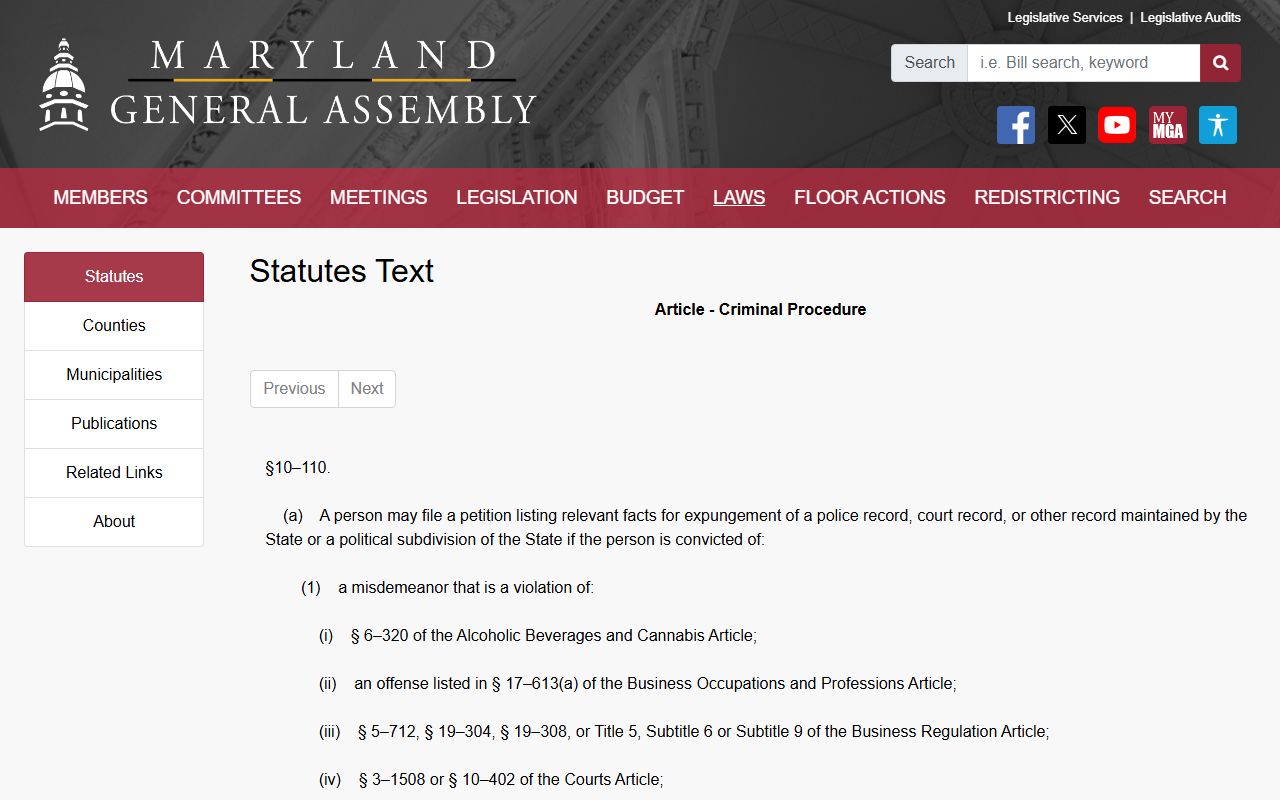
For Baltimore County criminal court records, shielding can reduce public access without making the record disappear from every official system.
Public Access to Baltimore County Criminal Records
Maryland public access starts with the presumption that judicial records are open unless restricted by constitution, statute, Maryland Rule, court order, or case law. In practice, Baltimore County criminal court records may be searchable online as summaries, while full public documents require clerk access. The Criminal Division of the Clerk of the Circuit Court can be reached at 410-887-2625, and the clerk's main office is in the County Courts Building at 401 Bosley Avenue in Towson.
Several restrictions are especially important in criminal files. Juvenile matters are restricted. Expunged records are not public. Sealed records require court authority. Some warrant records are restricted before execution or while sealed. Case Search may suppress certain non-conviction outcomes and cannabis-related outcomes from remote display. A record that is not visible online is not always proof that no case exists.
Note: Use the court disposition, not the charge heading alone, before treating a criminal case as a conviction record.
Baltimore County Defense and Copy Help
Criminal defendants who need counsel may use the Maryland public-defender eligibility process. The Maryland Office of the Public Defender Baltimore County office is the local public-defender contact, and the Judiciary's public-defender information explains eligibility steps through a commissioner or Guide and File process.
Public-defender contact is not a record search tool, but it is relevant when the criminal court record shows an active case, upcoming hearing, bond issue, or pending charge.
Copy requests should go to the office that holds the file. For Circuit Court criminal documents, contact the Clerk of the Circuit Court Criminal Division or Judicial Records. For District Court misdemeanors, traffic-criminal matters, or certain felony starts, contact the District Court location shown on the docket. For jail custody, use official custody channels rather than the court case file. The Baltimore County Sheriff's Office, led by Sheriff R. Jay Fisher, is relevant to court security, legal process, and warrant questions, but it is not the clerk for criminal case-file copies.
Restricted Baltimore County Criminal Court Records
Restricted criminal court records include juvenile cases, sealed cases, expunged files, shielded records, certain warrants, medical or personal identifier material, and some protective-order related records. Family or juvenile facts inside a criminal file may also be limited. Maryland Rule 1-322.1, referenced by the Case Search FAQ, addresses shielding personal identifier information in filings.
Expungement and shielding questions should be based on the exact disposition and court. Baltimore County defendants generally file expungement petitions in the court where the case was resolved. The Clerk's Office lists an Expungement line at 410-887-3090. If the case was resolved in District Court, the District Court handles the filing. If the case was resolved in Circuit Court, the Clerk of the Circuit Court is the local filing point.